Buttery Buttermilk Pancakes
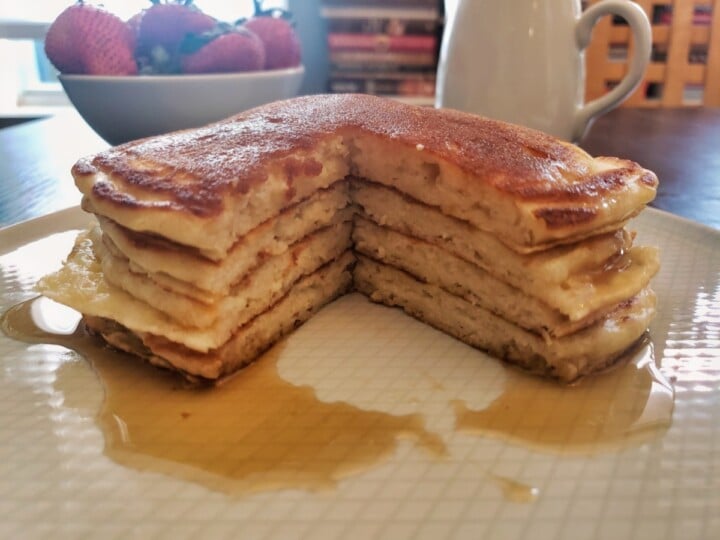
Even pancakes made quickly, with a mix, can be tasty. But these thick, buttery, buttermilk pancakes are on another level.
This post may contain affiliate links and/or codes.
You won't pay anything extra, but I might make a commission.
Fourteen years ago, back when I was posting all the time and not worrying too much about what things looked like, I put up a YouTube video about how to make pancakes:
This quickly became one of my most popular videos, for reasons I never really understood. And at least one commenter pointed out that it's really only about how to cook the best pancakes, because I don't give a recipe. I can't remember if I say it in the comments or the video, but those were made with a mix. I use pancake mix a lot, because the finished product tastes very good.
Don't ever be embarrassed about using a baking or cooking mix!! If you like the way it tastes, that's what matters. Some people love the process of making food from scratch, and some people just want to get to the finished product as quickly as possible. I love the process 90% of the time, but I don't find anything especially fulfilling about mixing up pancake batter from scratch, and a mix tastes good enough for a random Saturday morning.
However, sometimes I want something a little more special, richer, more indulgent. And when I do, I turn to this recipe.
I have no idea where I got it. I found it in a folder of recipes that I hadn't opened in at least ten years, handwritten on a piece of paper. There wasn't even a title, and it wasn't my handwriting! But one day I decided to try it, and was blown away by how delicious they were.
The one downside: they take longer to cook, because they're so thick. I cook them at a lower temperature than my usual pancakes, because if you try to cook them too fast, the outsides will get too dark before the insides have time to cook.
One note about them though: if you make them thin, they aren't very special. You need more of the inside part to really taste the buttery goodness. The last time I made them I made this mistake, and after hyping them up to a house guest, they tasted...fine. I could've used a mix and gotten a similar result. So, err on the side of too thick if you're unsure, because after the batter rests, you can always gently stir in a little more liquid if it's too thick.
So how thick should they be? After they've rested, they should be thick enough that the batter doesn't flatten out on its own. You should have to take the back of a spoon (or an ice cream scoop, which is what I use to dispense this batter) to flatten it out a bit.
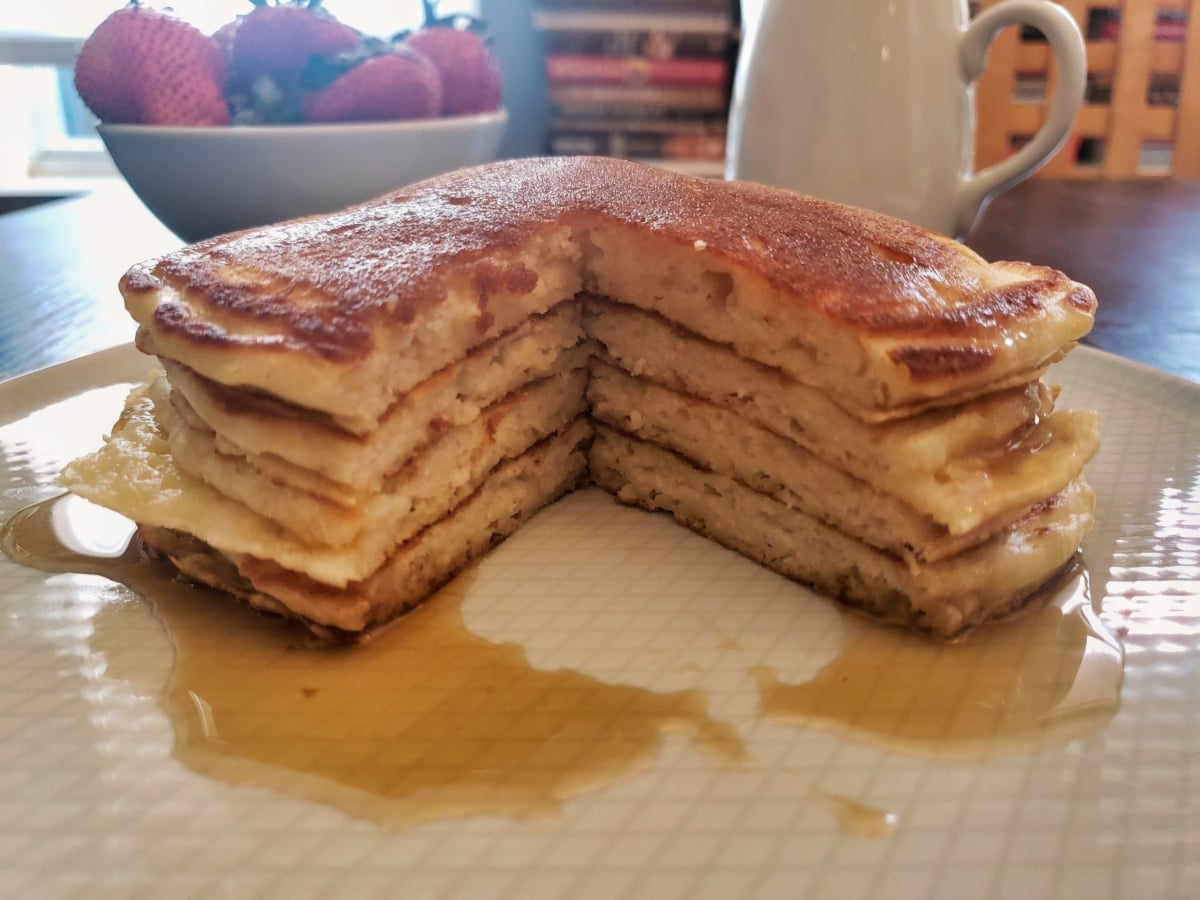
I've been meaning to put these online for a long time, and today a YouTube commenter requested the recipe, so I decided that today was the day. But I don't have any pictures of these pancakes! The picture above is of regular old boxed pancake mix, as a placeholder. I'll take some pics the next time I make this recipe.
How to keep pancakes warm
If you want to serve all of the pancakes at once, you'll have to keep the first ones warm while the rest cook.
I have seen so many recipes that say to keep the pancakes warm in an oven set to the lowest temperature, sometimes on a baking sheet, sometimes on a cooling rack. Either way, you're going to end up with crispy, dry pancakes by the time the last ones are cooked.
After experimenting with several different ways of keeping them warm, including different temperatures and using steam, I settled on a baking sheet with a cake tin on top. I'm usually not making too many, so I do this in my toaster oven, but when I'm making more, I keep the pancakes warm in my oven, on two different shelves.
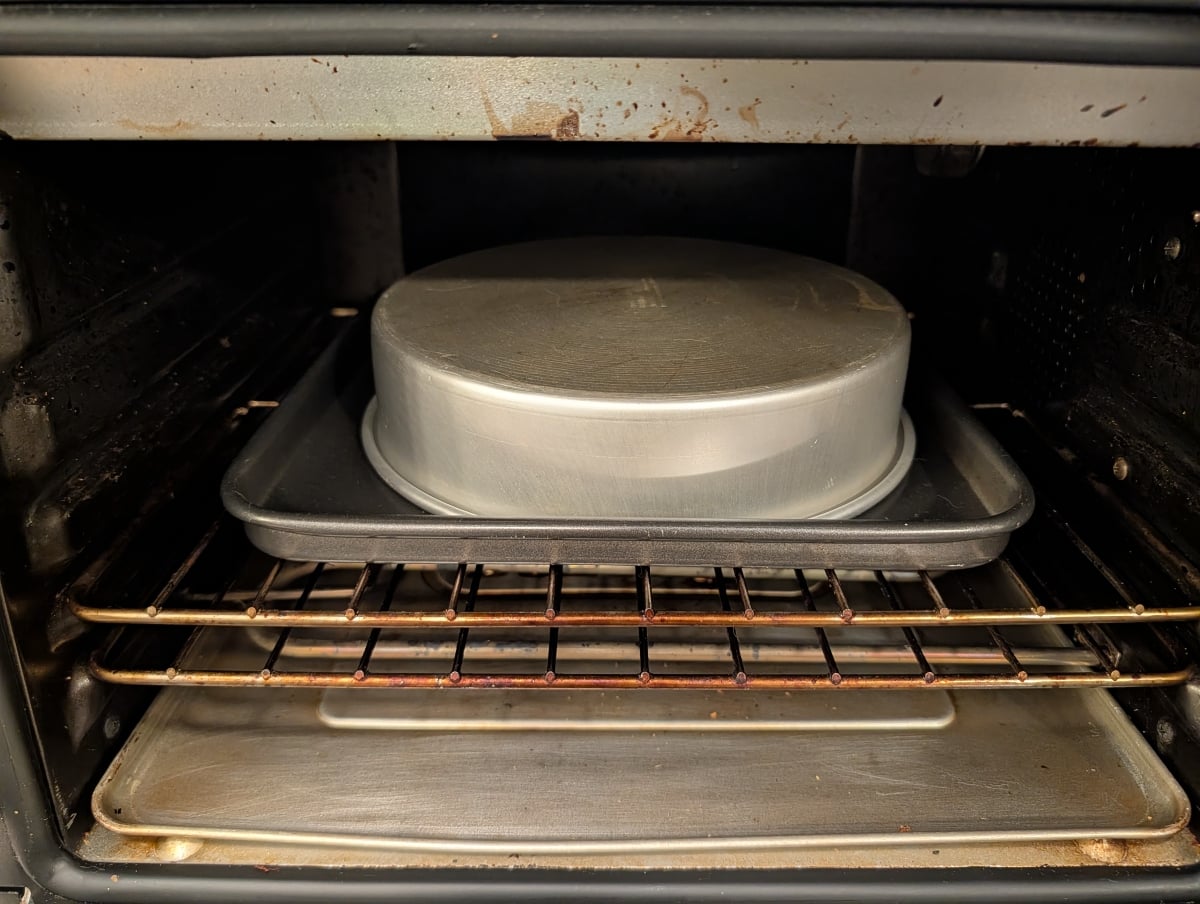
I keep a butter knife nearby, and I've gotten good at lifting the cake tin with the knife while putting the pancake on the baking pan. It takes a little practice. You can always just take the pan out each time, but I like to keep as much moisture in there as possible, so lifting the lid just enough, and for a short amount of time, is ideal.
If you don't have two pans that fit into each other well, I would suggest a baking sheet and some foil. Just make sure you tuck the foil under the pan so that the moisture doesn't escape.
Ingredient notes
Aluminum-free baking powder
It's not tragic if you don't have aluminum-free baking powder, but whenever you're making something that doesn't have very strong flavors, it's best. Otherwise you can end up with a bit of a metallic flavor in the finished product.
Most aluminum-free baking powders are single-acting, which means they're activated by the liquid in a recipe. I use Rumford brand, because it's double acting, which means it activates from the liquid, and then again from heat. Bob's Red Mill also has a double-acting baking powder that's aluminum-free, but I've never tried it.
Whole milk buttermilk
The buttermilk available in stores isn't, technically, buttermilk, which is what's left over when you make butter from cream. The most common buttermilk in stores (at least where I live) is fat-free or low-fat cultured buttermilk, which is very thin.
The buttermilk in this recipe isn't just providing acid to activate the baking soda, it's also helping with the thickness. So if you use thin buttermilk, the pancakes will also be thin.
If you can't find cultured buttermilk made with whole milk, I'm honestly not sure what the best substitute would be. You need something thick and acidic. Half whole milk, and half sour cream or yogurt might work. Or if you have powdered buttermilk, which is meant to be mixed with water, you could add it to whole milk instead (for this recipe, ½ cup buttermilk powder and 2 cups milk). But I've never tried these substitutes, so I can't say for sure whether they would work.
Melted unsalted butter
There's nothing special about the butter itself, you can use any kind of unsalted butter (or see the recipe note to substitute salted butter). But make sure you don't melt it ahead of time! I made that mistake once, and it solidified as soon as it hit the egg mixture.
Equipment
You don't really need any special equipment for this, but a couple of things will help you. The first is an electric griddle. If you have one that has a temperature setting in degrees, you won't have to wonder if the heat is right. If your griddle doesn't have a degree setting, or you're using a non-stick pan, a laser thermometer is really handy (plus, your cats can chase the red dot while you wait for the pancakes to cook!).
I have this griddle, and I love it. It's so versatile, and has a good amount of surface area. But I used to have something like this, and it cooked great pancakes.
If you're looking for a good non-stick pan instead, I have several of these in different sizes. They're just as good as much more expensive pans. In fact, I have a ton of pans from this brand, they're excellent.
The second, which I've mentioned already, is an ice cream scoop. I use this one, which is ¼ cup. It's much easier to use this kind of scoop, which sweeps the batter out, than to try to get thick batter out of a measuring cup. But if a measuring cup is all you have, I suggest you use a spoon to get as much out as possible.
Recipe Card
Buttery Buttermilk Pancakes
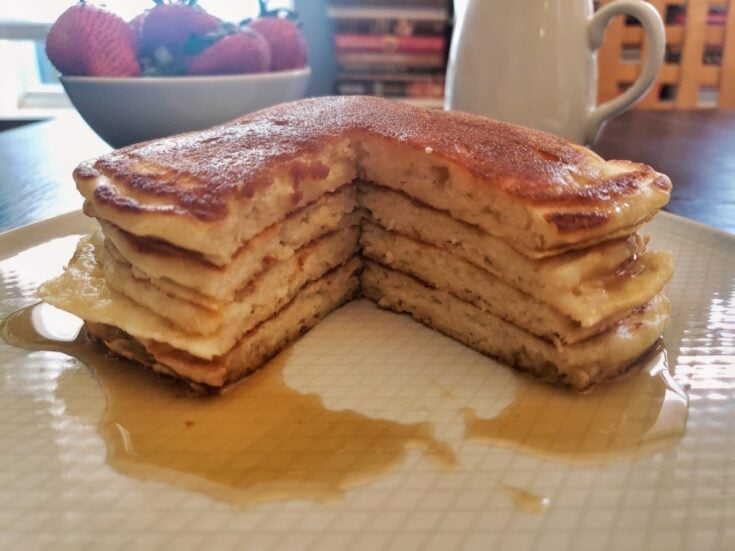
These are indulgent pancakes for when you want to impress guests, treat your family, or spoil yourself.
Ingredients
- 285 grams (2 cups) all-purpose flour
- 30 grams (2 tablespoons) granulated sugar
- 2 teaspoons aluminum-free baking powder
- 1 teaspoon baking soda
- ½ teaspoon table salt
- 2 cups whole milk buttermilk
- ¼-½ cup whole milk
- 2 eggs
- ¼ cup unsalted butter
- Vegetable oil for cooking
Instructions
- Whisk all of the dry ingredients together in a large mixing bowl; set aside
- In a medium mixing bowl, whisk the buttermilk, ¼ cup of milk, and the eggs until frothy, about 30 seconds
- Melt the butter and drizzle it slowly into the egg mixture, while whisking
- Pour the egg mixture into the bowl with the dry ingredients
- With a rubber spatula, gently and carefully stir the ingredients together just until combined (it will be lumpy)
- Set aside for 10 minutes
- While the batter is resting, heat a non-stick griddle to 350 degrees F, or heat a non-stick pan on medium-low heat until drops of cold water dance and jump and take a few seconds to evaporate
- Pour a little vegetable oil onto a paper towel and wipe it onto the griddle or pan (this should be a very thin layer, barely visible!)
- Using a ¼ cup ice cream scoop if possible, pour a quarter cup of batter onto the griddle for a small pancake, and a half cup for a larger pancake (see the note below about the thickness of the batter), then use the back of the scoop (or the back of a spoon) to flatten the batter out a little bit
- Cook until the edges are dry, bubbles are popping in the center, and bubbles are popping and staying open about an inch from the edge
- Flip, and cook on the other side until it's the same color as the top
- Serve with butter and syrup
Notes
Do not melt the butter ahead of time, or it will be too cool and will solidify once it hits the other ingredients.
If you don't have unsalted butter, you can use salted butter and reduce the table salt to ¼ teaspoon.
Make sure not to mix the batter any more than necessary. It will be very lumpy, but there shouldn't be streaks of flour. The lumps of flour will absorb into the batter during the resting time and while cooking.
The batter should be thick enough that it just barely spreads a little bit, into a non-circular shape as you pour it onto the pan. If it's too thick, carefully stir in a little more milk, and let it sit for another 5 minutes or so.
Recommended Products
As an Amazon Associate and member of other affiliate programs, I earn from qualifying purchases (but you won't pay anything extra!)
-
 OXO Good Grips Classic Swipe Ice Cream Scoop - Black, Stainless Steel
 -
Amazon Basics Electric Griddle with Nonstick Ceramic Coating, Adjustable Temperature, Detachable Dishwasher Safe Plate, Drip Tray, 10 x 20 inches, Black
-
Tramontina Professional Fusion 10-Inch Non Stick Frying Pan
-
Cuisinart Griddler® Deluxe, Electric Griddle, GR-150NAS